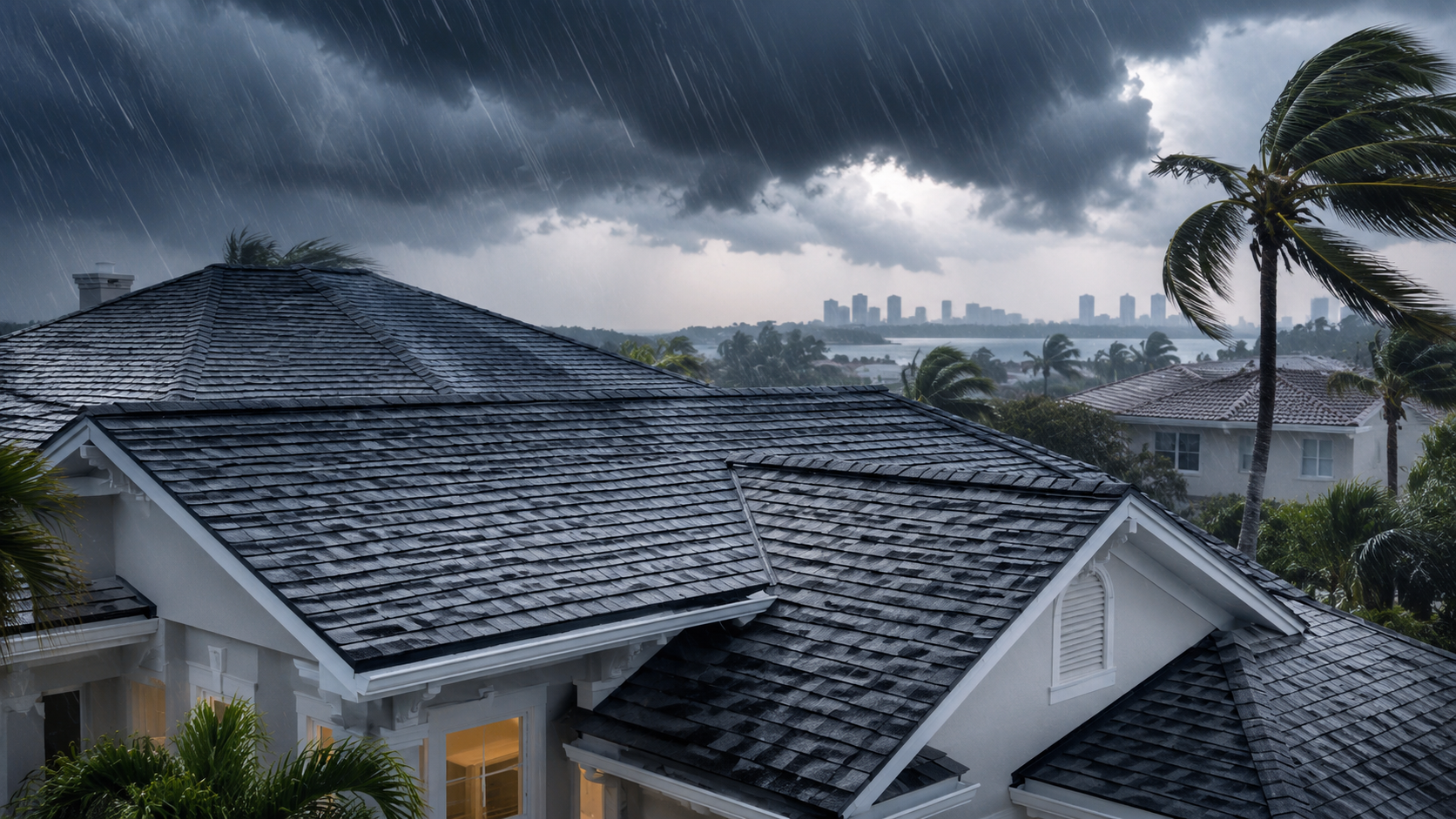
I’ve seen Tampa Bay storms do things to roofs that most people wouldn’t believe
I’ve been in this business long enough to have walked a lot of roofs in the morning after a bad storm. And I’ll tell you what I’ve learned the homes that made it through with little to no damage weren’t just lucky. Their owners had taken care of things before the weather hit.
That’s really what it comes down to. Tampa Bay doesn’t ease into storm season. It has just arrived. And your roof is the first thing to find out.
Most of the damage I see could have been caught early. A loose shingle here, a gutter pulling away from the fascia, a skylight seal that’s been going soft for a couple of seasons. None of those things look like a lot on a calm day. But when the wind picks up and the rain comes sideways, they turn into something a lot more serious.
The first thing I always say know what you’ve got up there
Before storm season starts, get a real look at your roof. Not from the driveway. An actual inspection by someone who climbs up there and checks things properly.
I can’t tell you how many times a homeowner has called us after a storm saying they had no idea anything was wrong. And when we get up there, we find something that’s been wearing down for two, maybe three seasons. The severe weather didn’t cause it. It just finished it off.
If you want to protect your roof, you’ve got to know its condition before things get bad. That’s step one and it doesn’t change no matter how old the roof is or what it’s made of.
Gutters – I know it sounds boring, but stay with me
This is the one people roll their eyes at. And then it’s the one they call about in October.
Your gutters are a real part of how you protect your roof when the rain really comes down. When they’re clogged up or pulling loose, water doesn’t have anywhere to go. It just backs up along the roofline and finds whatever small gap it can work its way into. Sometimes you don’t see the damage for weeks.
Gutters protection is not complicated. Clean them out before the season. Make sure they’re still attached to the way they should be. Check that the water coming out of the downspouts is going away from the house, not pooling up against the foundation.
If your gutters are old or they were undersized to begin with, it might be worth putting in something a little heavier before the season gets going. The volume of rain we get here in Tampa Bay isn’t what most standard gutters were designed for.
Skylight- Don’t skip this one.
I have a soft spot in my heart for homeowners who love their skylights. I also take a lot of calls from those same homeowners on Sunday afternoons after a hailstorm.
The seals around skylights don’t last forever. The framing shifts a little over the years. And those tiny gaps that open up over time are exactly what water is looking for during severe weather. Skylight hail protection isn’t something most people think about until there’s water dripping into their living room. By then, the damage has already been done.
Before each season, have someone check the flashing and the seals around every skylight you’ve got. It takes maybe ten minutes, and it can save you a repair that costs real money.
A word about getting on the roof yourself
I’m not going to tell you that you can never go up there. But I will tell you that I’ve seen people get hurt, and I’d rather not have that happen to anyone reading this.
Wet roofs are slippery. Sections that look solid sometimes aren’t, especially after a storm has moved through. Roof fall protection a proper harness, the right footwear, knowing where to put your weight that’s not something you improvise.
We use proper roof fall protection on every single job, no exceptions. If you’re hiring someone to get up on your roof, make sure they do the same. And if you’re thinking about going yourself to take a look after a storm, please just call us instead. It’s not worth it.
What I mean when I say complete roof protection
There’s no one thing that handles everything. Complete roof protection is really just a bunch of smaller things done consistently good materials installed right, maintenance that actually happens, gutters that work, skylights that are sealed up properly, and someone checking on all of it before each storm season.
Here in Tampabay, that routine needs to happen every year without skipping. I know life is getting busy. I know the summer flies by and suddenly it’s August and you still haven’t called. But the homes that come through severe weather in good shape are the ones where somebody stayed on top of it.
It doesn’t have to be complicated. It just has to be done.
You can start today without picking up a phone
Walk around your house the next time it rains. Look at your gutters is water coming over the sides anywhere? Go inside and check your ceiling. Any new stains, soft spots, or discoloration? If you’ve got skylights, look at the frames from inside the house for any sign of moisture.
None of that tells you everything. But it tells you something. And if something looks off, that’s your sign to call before the next round of severe weather shows up.
We’ll come out, take a look, and give you a straight answer. That’s all. No pressure, no upsell. Just an honest read on where things stand so you can protect your roof from going into whatever Tampa Bay throws at it next.
Frequently Asked Questions
- How do I protect my roof before hurricane season in Tampa Bay?
The most important thing is getting a real inspection done before the season starts not just a quick look from the ground. You want someone up there to check out shingles, flashing, gutters, and skylight seals. Handle anything that’s worn down before severe weather arrives, because storms don’t wait for you to get around to it. - How often should Tampa Bay homeowners get their roof inspected?
Twice a year is what I recommend once in spring before hurricane season ramps up and once in the fall after it winds down. Tampa Bay is harder on roofs than in most places. The heat, the humidity, the storms it adds fast. Staying ahead of it with regular inspections is a lot cheaper than catching up after something goes wrong. - What is skylight hail protection, and do I need it?
It refers to impact resistant covers or reinforced glass that protects your skylight panels from hail damage. In Tampa Bay, hail comes with the territory during severe weather it’s not an if, it’s a when. At minimum, get the seals and flash around your skylights checked every season. That’s where water almost always finds its way in. - Why do gutters matter so much for roof protection?
Because when gutters don’t work right, water backs up along the roofline and finds the weakest point it can. A small gap that was never a problem in light rain becomes a real problem when you’ve got an inch of water an hour coming down. Good gutters protection keeping them clean, attached, and properly sized is one of the easiest things you can do to avoid water damage. - What does complete roof protection actually mean?
It means staying on top of several things at once regular inspections, clean and functional gutters, sealed skylights and vents, quality materials, and a routine that doesn’t get skipped year after year. In Tampa Bay specifically, it means treating hurricane prep as a regular part of home ownership, not something you scramble to do when a storm is already on the radar. - Should I go up on my own roof to check for damage?
Honestly, I’d rather you didn’t at least not without the right safety setup. Roof fall protection exists for a reason. Wet roofs after a storm are slippery and sometimes structurally unpredictable. It’s safer to call a professional and let them take a look. That’s what we’re here for. - What should I look for after a severe weather event?
Start inside check your ceilings for water stains or soft spots and look at the frames around any skylights for signs of moisture. Outside, look for shingles that are missing or shifted, granules collecting in the gutters, and gutters that are pulling away from the roofline. Any of those things after a storm means getting someone up there before the next one.