Most folks don’t notice a problem until there’s a stain on the ceiling or a smell coming from the attic. And I got it. You’re busy. The roof looks fine from the driveway. Why would you think anything’s wrong?
But here’s what I’ve seen again. Water finds the tiniest opening a little bit of lifted flashing, a cracked piece of caulk around a vent, one shingle that shifted just enough and it starts getting in. Real slow at first. Then it gets into the wood, into the insulation. And once mold gets comfortable up there, you’re not just talking about roof leak repair anymore. You’re talking about a whole lot more.
That’s why I tell every homeowner I talk to get your roof inspections done before something goes wrong. Not after.
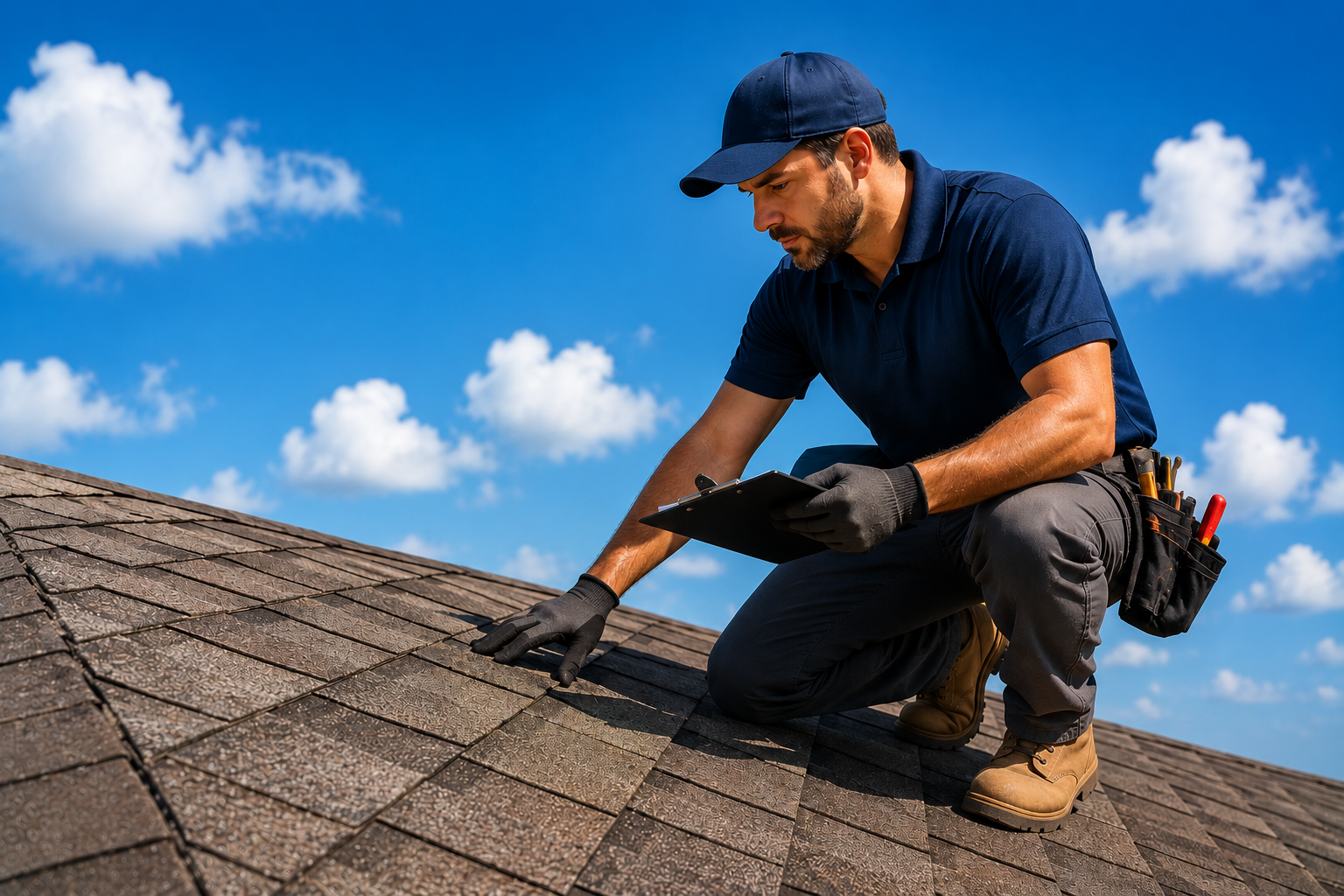
Here’s What We’re Actually Looking at When We Come Out
I want to explain this because I think some people picture us just walking around and glancing at things. It’s a lot more than that.
Flashing is usually the first thing I check. Replacing flashing comes up more than anything else after we do an inspection. Flashing is that metal that runs along your chimney, around your vents, up against the walls. It seals those edges. When it starts to pull away or crack which it does, especially with our heat down here water has a straight shot in. Most homeowners have no idea that’s even happening until we show them.
The other thing that surprises people is ventilation. Ventilation problems don’t always cause roof leaks directly, but they cause something just about as bad. When the attic can’t breathe right, moisture builds up in there. Sits on the wood. And wood that stays damp long enough starts to rot. I’ve pulled back insulation in attics and found decking that looked fine from the outside but was soft as cardboard underneath.
We also walk the gutters, check the valleys, and look at every penetration through the roof. Roof leaks almost never come from just one thing. Usually, it’s a couple of small things that have been added up.
Tampa Bay’s Weather Is Hard on Roofs. Harder Than People Realize.
I’ve worked in other parts of the country. Tampa Bay is its own thing.
The heat alone would be enough. But then you add the humidity; the afternoon storms from May all the way through November, the wind. Your roof is expanding and contracting in that heat and over time that movement loosens things. Nails back out a little. Sealant gets brittle. Gaps open up where everything used to sit tight.
And then a storm rolls through and all of a sudden, those little gaps are letting water in.
Regular roof inspections are how you stay on top of that. We catch the small stuff while it’s still small. Because I’ve done enough roof leak repair in this area to know that catching it early is always, always better.
So How Often Should You Actually Do This?
Twice a year is what I recommend. Once in the spring, the storm season really gets going and once in the fall after it winds down. That way you know what you’re working with before the hard part of the year, and you find out what got damaged coming out of it.
Now if a bad storm comes through in between and we get those don’t wait for the next scheduled time. Just call. Roof leaks don’t really care about your schedule.
And if your roof is getting up there in age, 10, 15 years or more, I’d say be a little more diligent about it. Older roofs have less margins. Things go a little faster once they start.
I’ve Seen What Happens When People Wait
I’m not trying to scare anyone. But I’d be doing you a disservice if I didn’t say this plainly.
By the time water is dripping through your ceiling, the job is already bigger than it needs to be. We’ve had jobs where a homeowner put off getting looked at for a year or two and by the time we got in there, the moisture damage had spread from the roof all the way down into the walls. All of that from something that would have been a pretty simple fix if we’d caught it earlier.
Get your roof inspections done. It doesn’t take long, it’s not expensive, and it’s one of those things that genuinely protects everything else in your house.
If you’ve got questions or you’re not sure what shape your roof is in, just give us a call. We’re happy to come take a look.
FAQ
- What does a seasonal roof inspection actually include?
We go through the whole roof system. Shingles, flashing around your chimney and vents, gutters, drainage, the attic ventilation, any place something penetrates through the roof. We’re looking for anything that could let water in or hold moisture somewhere it shouldn’t be. Replacing flashing and checking vent seals are probably the two most common things that come out of a routine inspection. - How do I know if I already have a moisture problem?
Sometimes it’s obvious stains on the ceiling, paint peeling on the walls, a musty smell upstairs, or in the attic. But sometimes you won’t see anything from inside the house. Soft spots on the decking, dark discoloration around roof penetrations, granules piling up in your gutters those are signs too. If anything looks off, get someone out for roof inspections sooner rather than later. Don’t sit on it. - Can ventilation problems really cause damage as bad as a leak?
They can, yeah. Ventilation problems don’t always cause direct roof leaks, but when the attic traps moisture, it does the same kind of damage over time. Condensation builds the wood framing, the decking gets soft, mold can get in. I’ve seen attics that looked okay from the outside but had real problems underneath, all from airflow issues. Good ventilation is part of a healthy roof, plain, and simple. - How much does roof leak repair cost compared to just getting an inspection?
The difference is pretty significant, honestly. Catching something small a bit of bad flashing, a lifted shingle, some debris blocking a valley is usually a straightforward fix. Let that same thing goes a season or two and now you’re potentially looking at new decking, insulation removal, maybe mold remediation, plus the actual roof leak repair on top of all that. Prevention costs a lot less. I’ve never had a homeowner tell me they wished they’d waited longer. - Is storm season really the only time to worry about roof damage in Tampa Bay?
Not at all. The heat we get in summer is hard on roofing materials all on its own. UV breaks down sealants, temperatures swings work fasteners loose, flashing gets brittle. The storms get most of the attention, but a lot of the underlying damage builds in the dry months before. That’s why doing roof inspections in the spring is so valuable you want your roof tight before the rain really starts.