
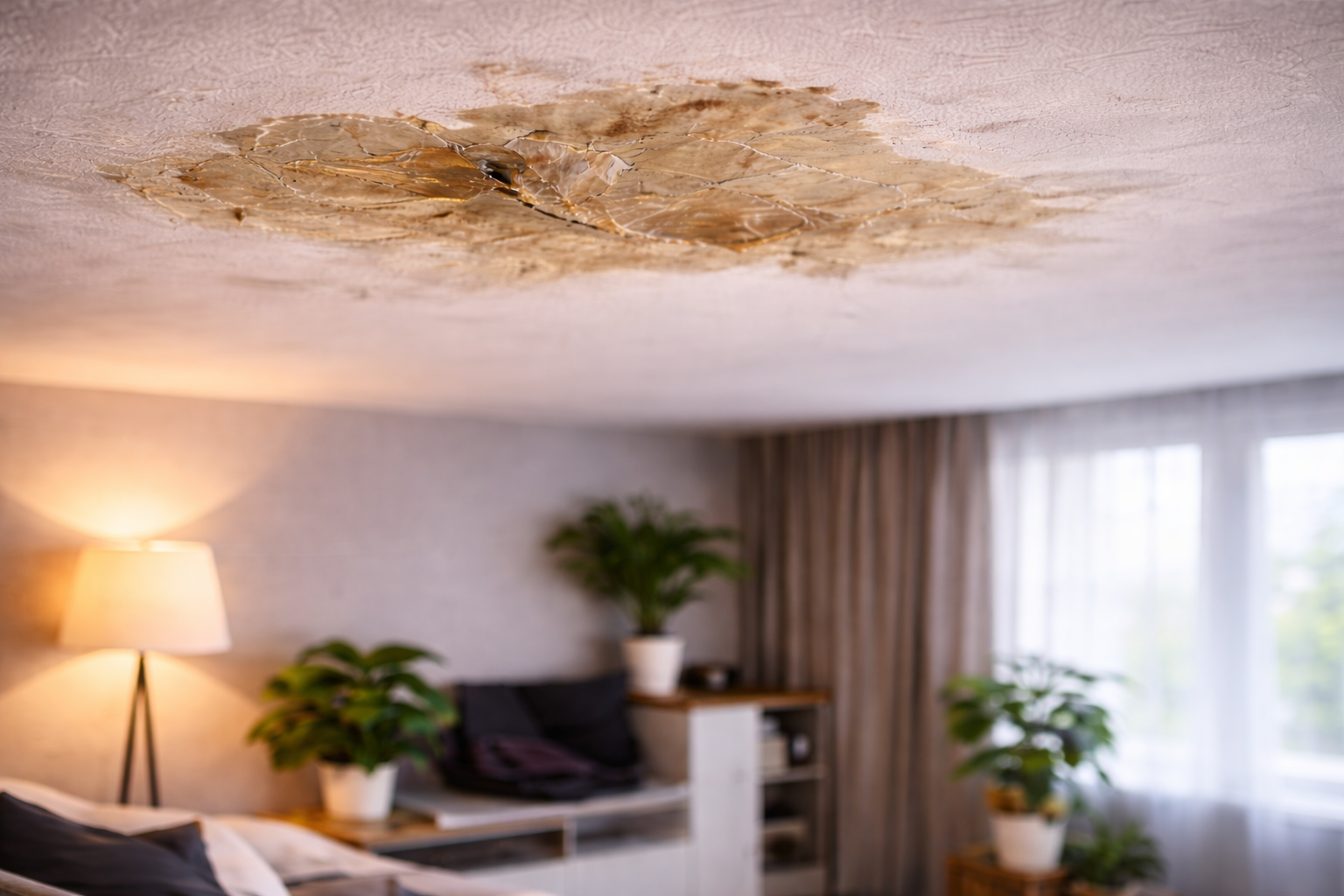
Water Leaking from the Ceiling? Don’t Sit on It. If you move fast, it doesn’t have to get expensive.
If you’ve got water leaking from the ceiling, I’ll tell you straight, that’s not usually a small problem.
Most of the time, it doesn’t start with a big dramatic leak. It starts with a little drip. Maybe a small stain that shows up one day and you think, “I’ll keep an eye on it.” A lot of homeowners do that. I got it.
Then we get the next hard rain here in Tampa Bay, and now that little spot is bigger. The drip is steady. The drywall starts looking swollen. That’s usually when the concern sets in.
I’ve been around enough roofs down here to tell you about this part for sure: by the time you notice water leaking from the ceiling, the roof issue usually started a while back. Could have been days ago. Could’ve been weeks. Water has a way of sneaking quietly before it finally shows itself inside the house.
And once it starts showing up inside, it’s already been doing damage somewhere else.
Why This Happens So Often Around Tampa Bay
Florida roofs take a beating. That’s just the truth.
Between the heavy rain, the wind, the heat, the humidity, and all the little storms that roll through, roofs in Tampa Bay stay under pressure year-round. It doesn’t take much time. One weak area is enough.
A real common issue I see is water leaking between gutter and fascia. Gutters get clogged with leaves and debris, or they start pulling away from the house a little. Instead of the rainwater going where it’s supposed to go, it runs behind the gutter. From there, it gets into the wood, and then sooner or later it works its way inside.
Another one is metal chimney leaks in heavy rain. A chimney can look fine from the ground, but if the flashing is loose or the seal around it has broken down, water will get in there fast once the storms start blowing hard.
Same thing with common skylight leaks. Skylights are nice, no question. But they’re also another opening in the roof system, and any opening is a place where water can try to get through. Once the seal starts failing or the flashing around, it gets weak, that leak usually doesn’t stay small for long.
From inside the house, all of these problems can show up the same way: water leaking from the ceiling.
The Part Most People Don’t See
This is what surprises a lot of homeowners.
Water rarely comes straight down from the exact spot where the roof failed. It travels. It follows rafters, decking, insulation, nails, wiring, whatever path gives it a way to move.
So, when you see water leaking from the ceiling in one room, the actual roof problem might be several feet away. Sometimes more than that.
Meanwhile, water may already be sitting in the insulation. It may be softening up the wood. It may be starting to mold in places you can’t even see yet.
Usually, the warning signs look like this:
- paint peeling
- drywall bubbling
- a musty smell that wasn’t there before
- staining that keeps growing
- a ceiling that starts to sag or feel soft
Once it gets to that point, you may not be dealing with just a quick roof repair anymore. Now you could be looking at ceiling water damage repair too, and that gets more expensive in a hurry.
What I’d Tell You to Do First
First thing, catch the water. Bucket, towels, whatever you need to do to keep it from ruining the floor or furniture.
Move anything valuable out of the area. And if the ceiling looks swollen or bulging, be careful. Water can pool above drywall, and I’ve seen sections come down with very little warning.
If you can safely get into the attic, take a look. Sometimes you’ll see wet insulation or the path the water’s taking. Don’t put yourself at risk doing it, though.
Outside, after the weather clears, look for the obvious stuff. Missing shingles. Loose flashing. Overflowing or sagging gutters. Signs of water leaking between gutter and fascia. Those are all common trouble spots.
If your home has a chimney, that deserves a look too. Metal chimney leaks in heavy rain often start small, and homeowners usually don’t notice until the inside stain appears.
And don’t ignore the skylight. Common skylight leaks are one of those things people miss until the drywall around it starts showing damage.
Main thing is this: don’t spend too much time guessing. Water doesn’t repair itself, and it usually doesn’t stay contained.
Why Waiting Costs More
I’ve heard this plenty of times: “It only leaks when it rains hard or when the wind is from a certain direction.”
That may be true, but it doesn’t mean the problem is minor.
If you’ve already seen water leaking from the ceiling once, then the entry point is there, and the path inside the home is there too. Next storm it’s probably coming back.
And every time it comes back, it usually gets a little worse. More insulation gets wet. More drywalls get damaged. More wood stays damp longer than it should.
If you catch it early, maybe it’s just a repair on the roof and a small touch-up inside.
If you let it go, now you may be paying for full ceiling water damage repair, insulation replacement, repainting, or maybe mold remediation too. That’s where the bill starts climbing.
That’s the whole game with roof leaks. Early is cheaper. Late is not.
How To Keep It from Happening Again
Most roof leaks don’t come out of nowhere. Usually there were warning signs before the ceiling started dripping.
Keeping gutters cleaned out makes a big difference. That helps prevent water leaking between gutters and fascia, especially during storm season when water is hitting hard and fast.
Check your chimney flashing now and then. A lot of metal chimney leaks in heavy rain come down to worn sealant, shifting metal, or flashing that’s not tight anymore.
Take a look at the skylight, too. Catching common skylight leaks early is way better than repairing stained ceilings and damaged drywall later.
And ventilation matters more than people think. If moisture gets trapped and can’t move out the right way, it causes trouble over time.
I’ve even seen newer roofs leak because something small got missed during installation. So no, it’s not always just about an old roof.
If you’re already seeing signs of water leaking from the ceiling, chances are the issue has been there longer than it looks.
The smartest move is to contact professionals for an urgent roof repair, before a small issue turns into a major mess.
FAQs About Water Leaking from Ceiling
- What should I do first when I notice a leak?
Catch the water, move your things out of the way, and get the leak checked before it spreads any further.
- Can clogged gutters cause ceiling leaks?
Yes, absolutely. Water leaking between gutters and fascia is very common when gutters are blocked, overflowing, or pulling away from the house.
- Why do chimneys leak during heavy rain?
Usually, it’s a flashing or seal problem. Metal chimney leaks in heavy rain happen when water gets around weak spots at the base of the chimney.
- Are skylights a common leak source?
They can be. Common skylight leaks usually start when the seals wear out, or the flashing around them stops doing its job.
- How do you fix ceiling damage from a leak?
It depends on how bad it is. Sometimes it’s drying the area, replacing damaged drywall, and repainting. Other times it takes more involved ceiling water damage repair if the leak sat there too long.