I’ve been roofing in the Tampa Bay area for a long time. And one thing I can tell you without hesitation is not every roofing material was made for this place. The heat here is relentless. The storms are serious. The humidity never really lets up. So, when homeowners start asking me what the best long-term option is, tile roofing almost always comes up. And there are good reasons for that.
It’s not just about how it looks, though I’ll admit it’s hard to argue with the curb of appeal. It’s about getting a roof that actually works with Tampa Bay’s climate instead of fighting it every season.
The lifespan alone makes it worth the conversation
Here’s the number that surprises most people when I bring it up. A quality tile roof can last 50 years or more. Some go longer than that with basic upkeep. When you hear that for the first time, it changes how you think about the whole thing.
Compare that to asphalt shingles, which typically need replacing every 15 to 20 years, and the math shifts fast. You’re not just buying a roof. You’re buying decades of protection without going through that whole cycle of repairs and replacements over and over again. Less material used over time means less waste too. That’s good for your budget and good for the environment. And here in Tampa Bay, where roofs take more abuse than almost anywhere else in the country, that lifespan really gets tested. Tile holds up.
Thermal regulation is a bigger deal than most people realize
This is something I talk about with Tampa Bay homeowners all the time. Thermal regulation and that’s just a way of saying how well your roof manages heat matters a lot when you’re living somewhere that pushes past 90 degrees most of the summer.
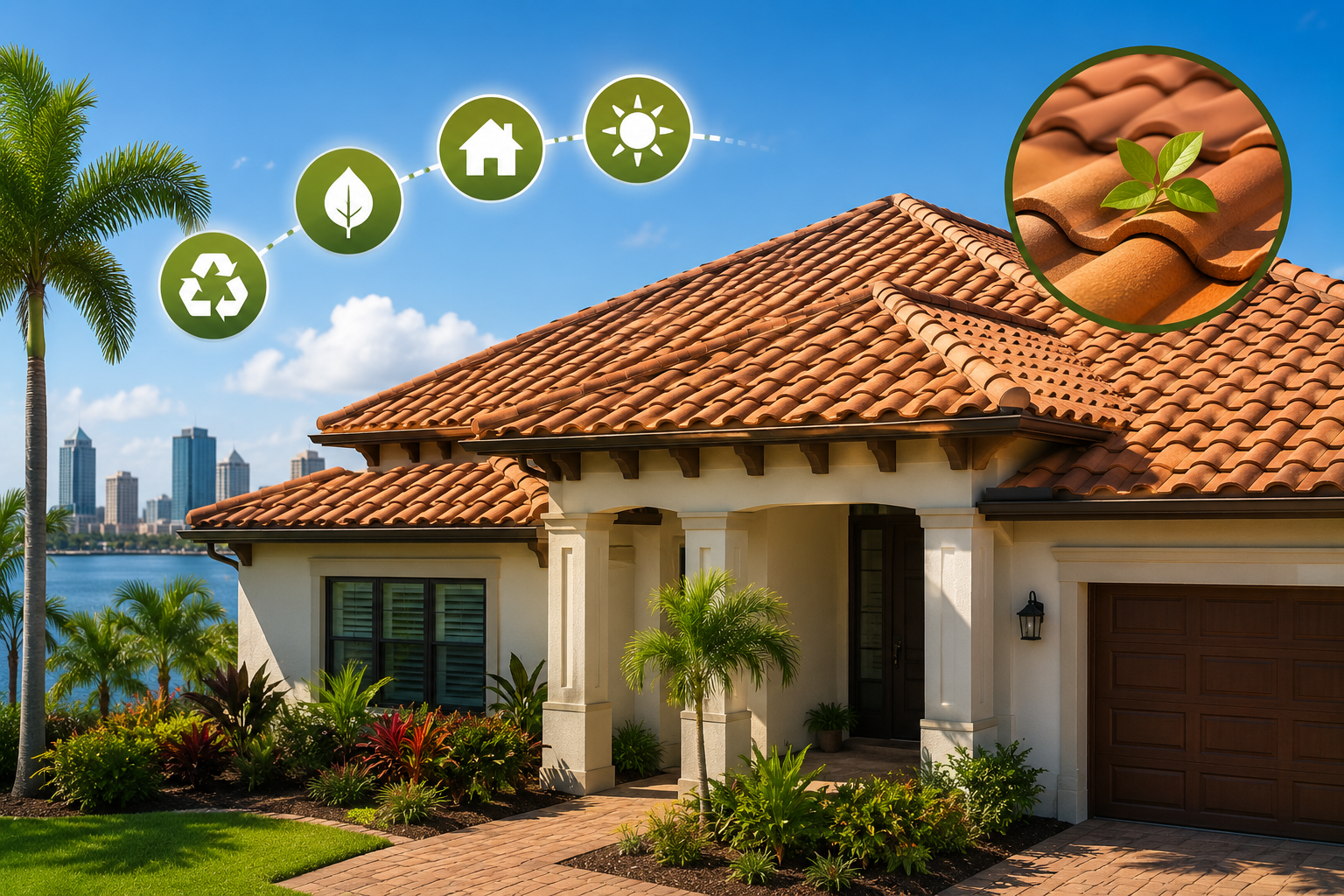
Tile roofing handles this naturally. The way the tiles are shaped and laid creates small air gaps underneath, and those gaps let heat escape instead of building up in your attic. That keeps the inside of your home cooler, and it takes some of the load off your air conditioning system.
Better thermal regulation means lower energy bills month after month. Over the full life of a tile roof, that adds up to real money. Most homeowners don’t notice it right away but they sure notice it after their first summer electric bill after installation. And then every month after that.
Resilience is what Tampa Bay demands
You want a roof that doesn’t flinch. Storms, high winds, salt air from the coast, UV exposure all year long tiles are built to handle all of it. And that resilience isn’t just a marketing language. It’s why tile has been the go-to material in hurricane-prone areas for generations.
Concrete and clay tiles are dense. They’re heavy. And that weight works in your favor when the wind picks up. They don’t lift the way lighter materials can. They don’t crack under the heat cycles Tampa Bay puts a roof through every single year. I’ve seen what happens to roofs after a serious storm rolls through this area. Tile roofs almost always come out better. That peace of mind is real, and it’s part of what you’re getting when you choose to tile.
Minimal waste makes it a genuinely sustainable choice
Sustainability gets thrown around a lot these days. But with tile roofing, it means something specific and honest.
Clay and concrete tiles come from natural materials. They don’t use off-gas chemicals. And when a tile does crack or break which does happen occasionally you replace that one tile. Not the whole roof section. That’s a real advantage compared to roofing systems where a little damage in one area can mean tearing off a lot more than you bargained for.
And because the lifespan is so long, you’re not feeding that cycle of roofing waste that comes with materials needing replacement every decade or two. One good tile roof, installed right, can genuinely be the last roof a homeowner in Tampa Bay ever needs.
Curb appeal that holds its value
I’ll be straightforward about this one. How your home looks matter not just for pride, but for what it’s worth when you go to sell it. Tile has a look that’s hard to replicate. The color doesn’t fade the way other materials do. The texture adds something to a home exterior that just holds up over time.
Drive through any established Tampa Bay neighborhood, and you’ll see what I mean. Curb appeal from a tile roof isn’t a short-term thing. It ages well. And when buyers come through, they notice the difference between a tile roof and everything else.
It’s an investment that pays you back
Yes, tile roofing costs more upfront than some other options. I won’t pretend otherwise. But stretch the math out over 50 years and the picture looks very different.
Lower energy bills from better thermal regulations. No replacement costs every 15 years. Individual tile repairs instead of full tear-offs. Curb appeal that supports your resale value. Resilience that keeps repair costs down after Tampa Bay’s storms. And the peace of mind that comes with knowing you made a decision that holds up literally and financially.
The Tampa Bay homeowners I’ve worked with who went with tile almost never look back. And the ones who waited? Most of them tell me they wish they’d done it sooner.
If you want to talk about whether tiles are the right fit for your home, just give us a call. No pressure, no complicated sales pitch. Just straight answers about what works for your house and your budget.
Frequently Asked Questions
- Is tile roofing a good choice for Tampa Bay’s climate?
It’s one of the best choices you can make for this area, honestly. Tile handles heat, humidity, UV exposure, and storm winds better than most roofing materials out there. The way tiles are designed naturally supports thermal regulation, keeping your attic cooler in the summer. It’s built for exactly the kind of weather Tampa Bay delivers year-round. - How long does a tile roof last?
A well-installed tile roof typically lasts 50 years or more. Some clay tile roofs go significantly longer with basic maintenance. That lifespan is one of the biggest reasons Tampa Bay homeowners choose to tile; it’s a long-term investment that outlasts most other roofing options for decades. When you’re in a place like Tampa Bay where roofs take a real beating every season, that matters a lot. - Does tile roofing hold up in hurricanes?
Tile has strong resilience in high-wind conditions. The weight and density of concrete and clay tiles keep them stable in ways lighter materials simply can’t match. That said, proper installation is everything. The right underlayment and fastening system make a major difference in how the roof performs when a serious storm comes through. That’s why who installs it matters just as much as what they install. - Why is tile roofing considered sustainable?
A few reasons. Tiles are made from natural materials, clay, and concrete. They have a long lifespan, so they don’t need replacing nearly as often as other materials. And when a tile breaks, you replace just that tile, not a whole section. That minimal waste approach adds to a meaningfully smaller environmental footprint over the life of the roof. For Tampa Bay homeowners thinking long-term, that’s worth considering. - Does tile roofing help lower energy bills?
It can, yes. The air gap design in tile roofing supports thermal regulation by letting heat escape rather than build up in the attic. That reduces the load on your air conditioning system, which translates to real savings on energy bills especially during Tampa Bay’s long, hot summers. Most homeowners notice the difference after their first full summer with a tile roof. - Does tile roofing improve curb appeal?
Absolutely, Tile has a distinctive, premium look that holds up over time. Unlike some materials that fade or wear unevenly, tiles keep their texture and color well. In Tampa Bay neighborhoods, a tile roof is often one of the first things buyers notice when they pull up, and it consistently supports strong resale value. It’s one of those upgrades that works for you the whole time you own the home. - How does tile roofing compare to asphalt shingles?
The main differences come down to lifespan, resilience, and thermal performance. Asphalt shingles typically need replacing every 15 to 20 years. Tiles can last 50 years or more. Tile handles Tampa Bay’s heat and storms better, and its thermal regulation makes it more energy efficient over time. The upfront cost is higher, no question. But the long-term value almost always favors tile by a wide margin, especially here in Florida where roofs work harder than almost anywhere else.